We build the whole course.
Book, slide deck, trainer guide, question bank and e-learning module, designed around one learning goal.
Any language · Remote, worldwide
What we can build for you
Your voice. Your brand.
Any language.
Built on proven learning science.
-
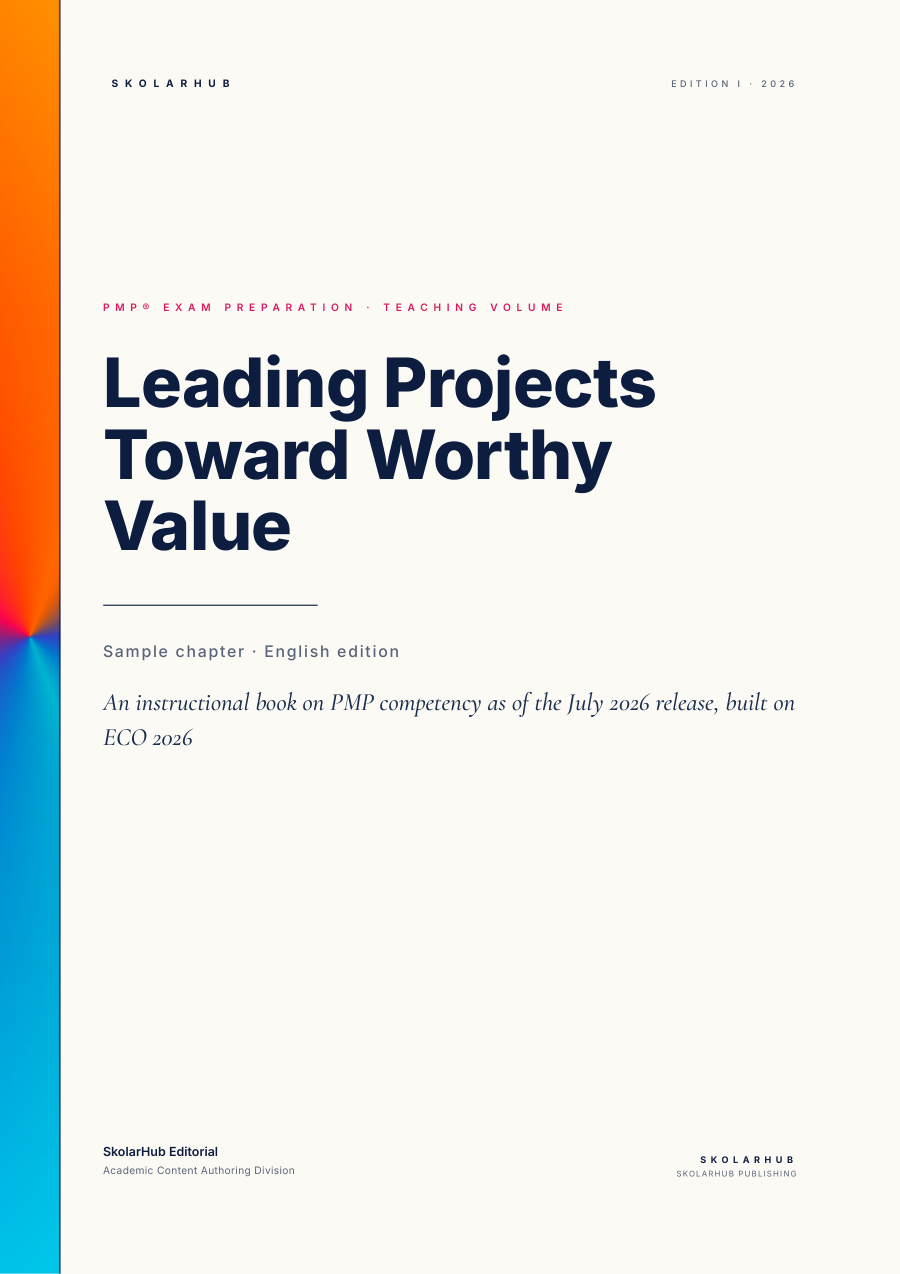
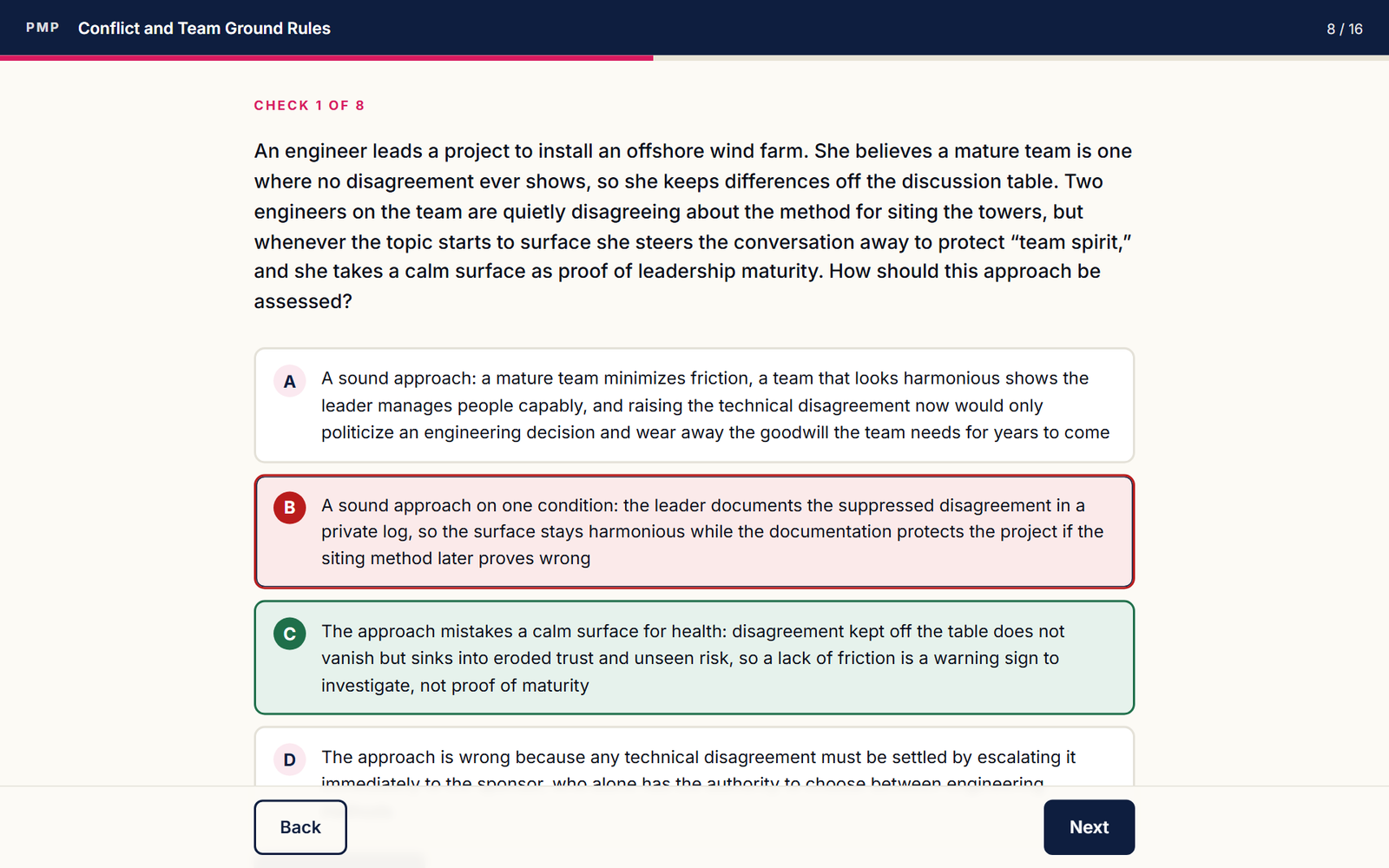
The whole chapter, written to be studied alone, with stop-and-think questions.
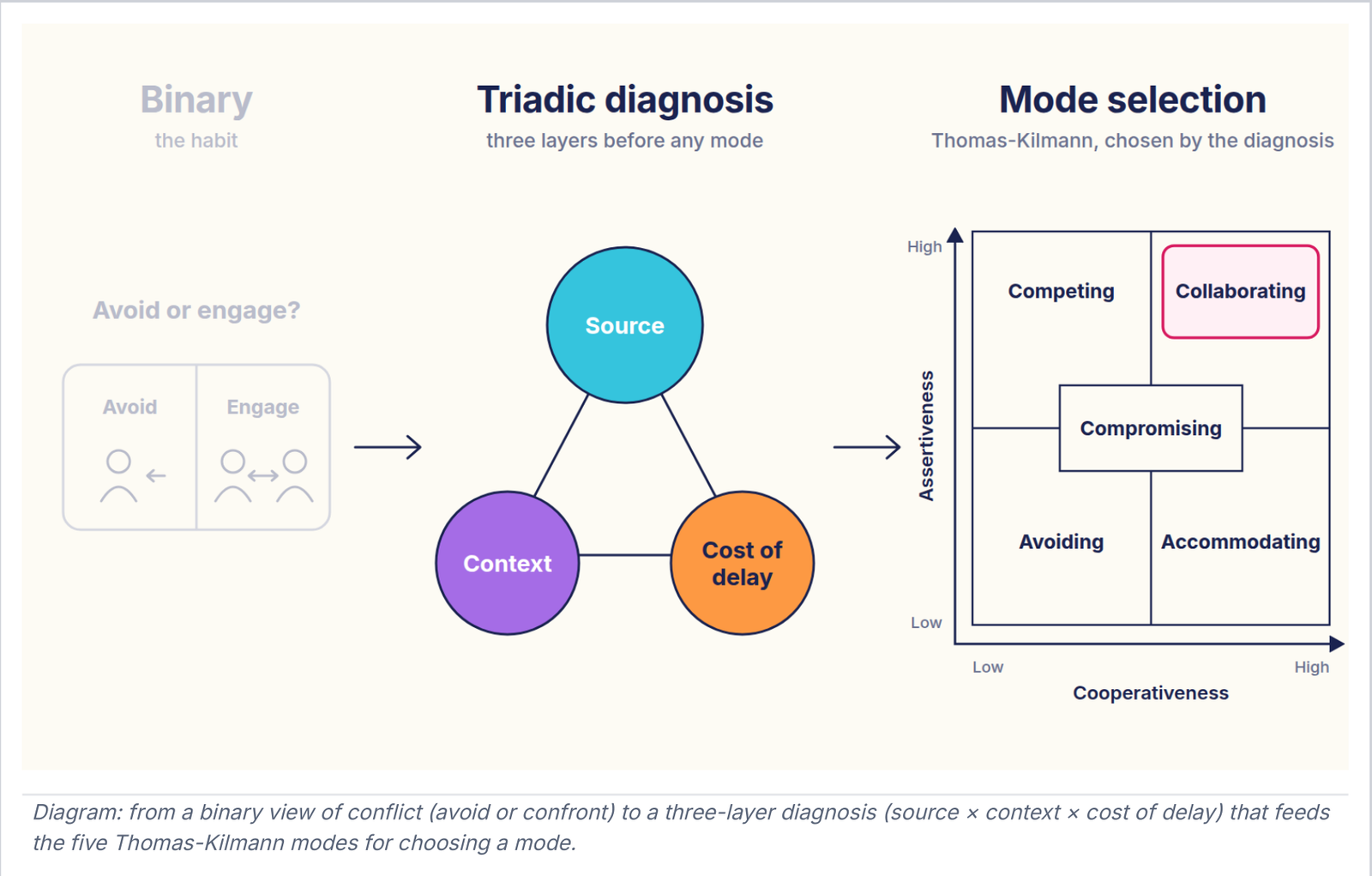
From the PMP® learner’s book. Read the book (PDF), opens in a new tab -
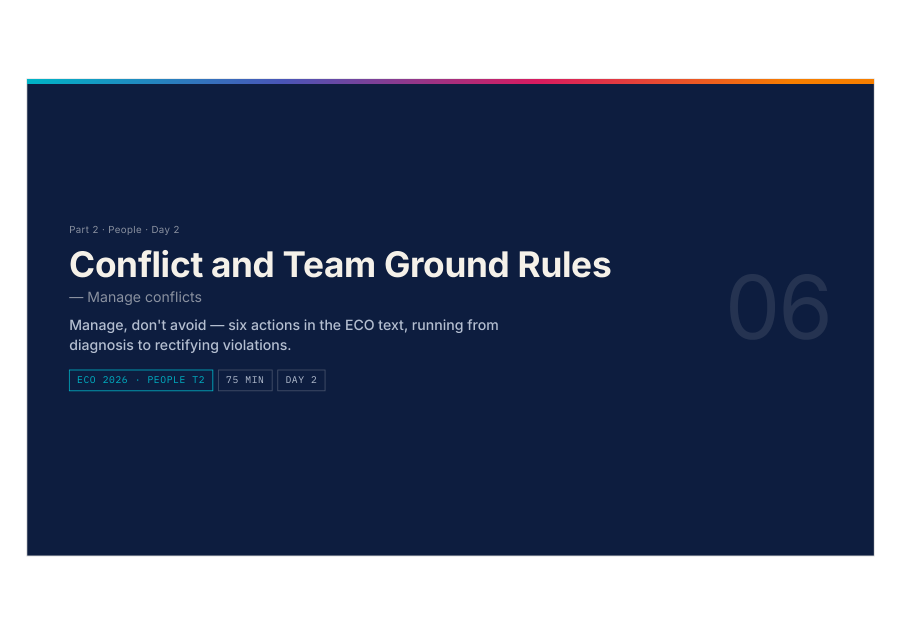
Presenter notes on every slide: what to say, not just what to show.
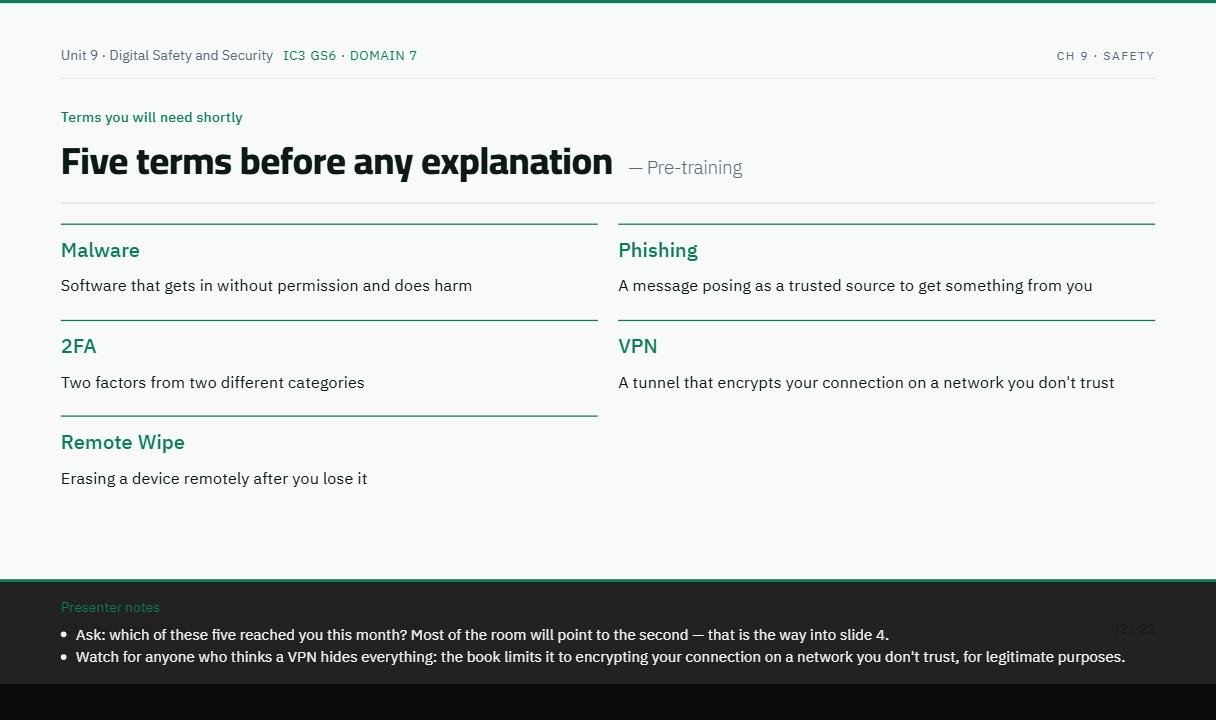
From the IC3 slide deck, with its presenter notes. Open the deck (PDF), opens in a new tab -
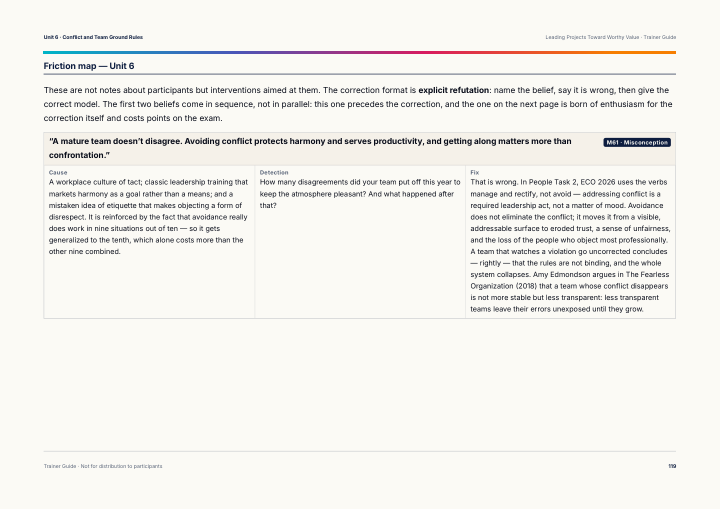
Minute by minute: what to say, what to ask, and the wrong idea to expect in the room.
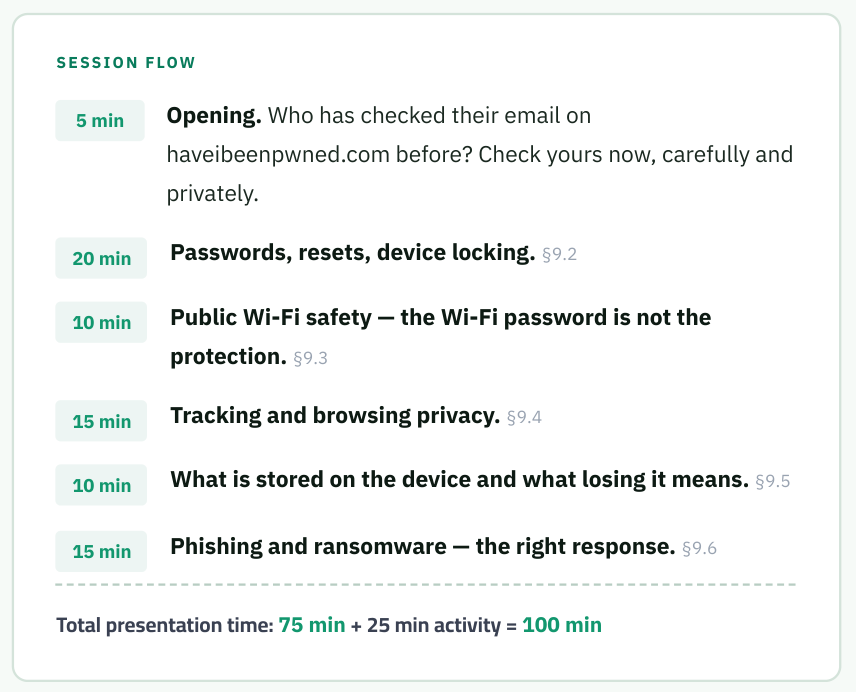
From the IC3 trainer guide. Open the guide -
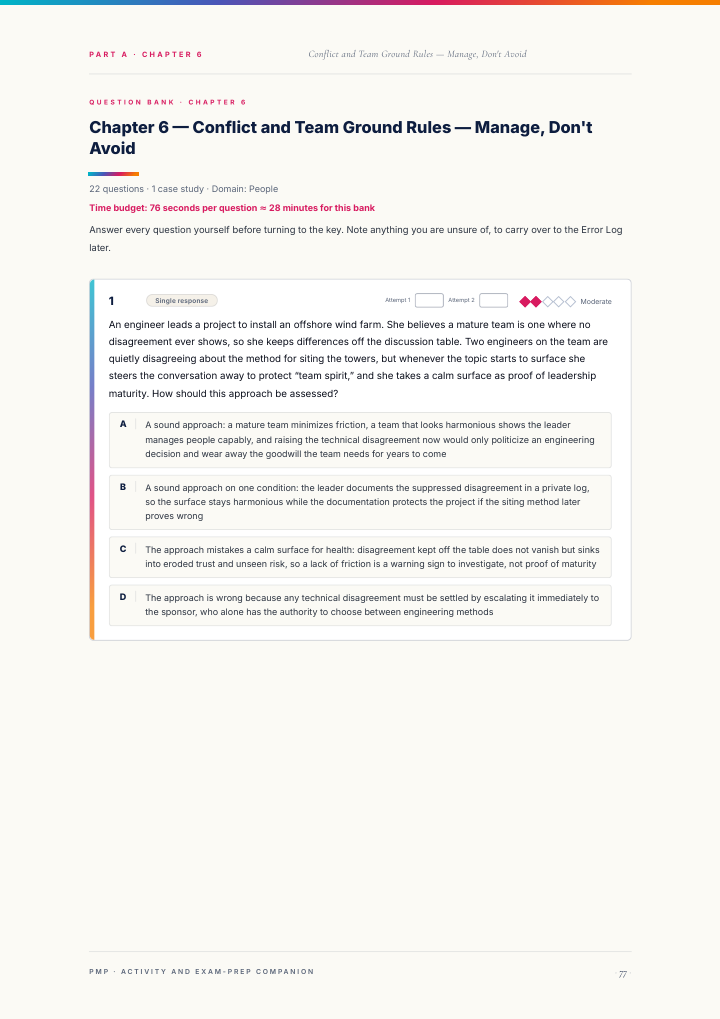
Every wrong answer explains why it attracts and what corrects it.
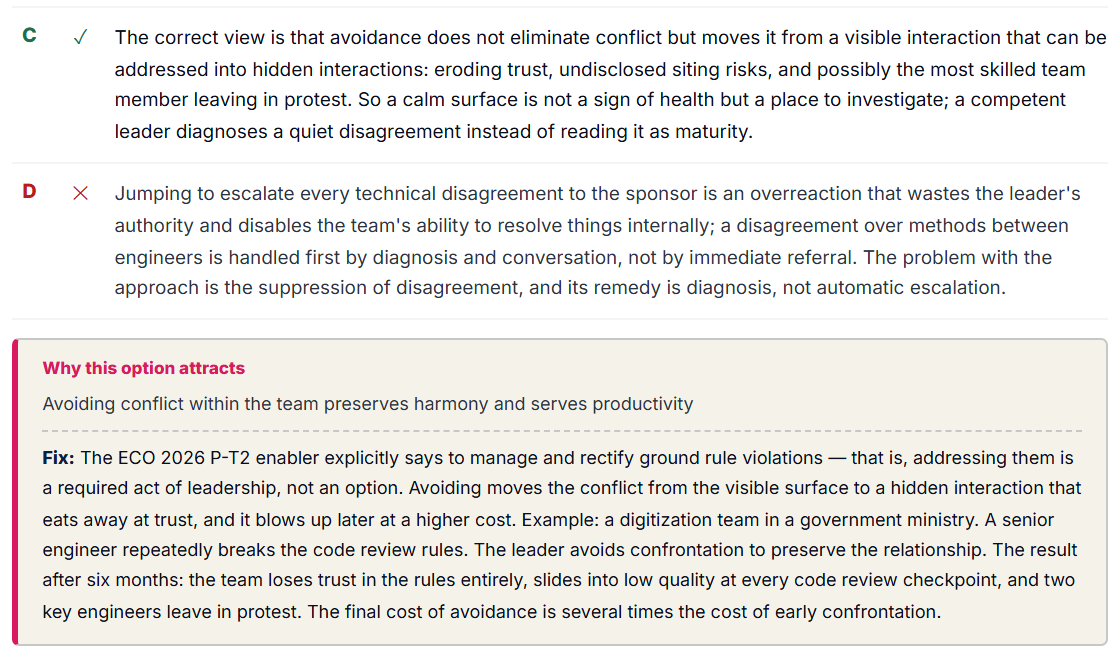
From the PMP® question bank. Open the bank (PDF), opens in a new tab -
Interactive lessons that run on your learning platform.
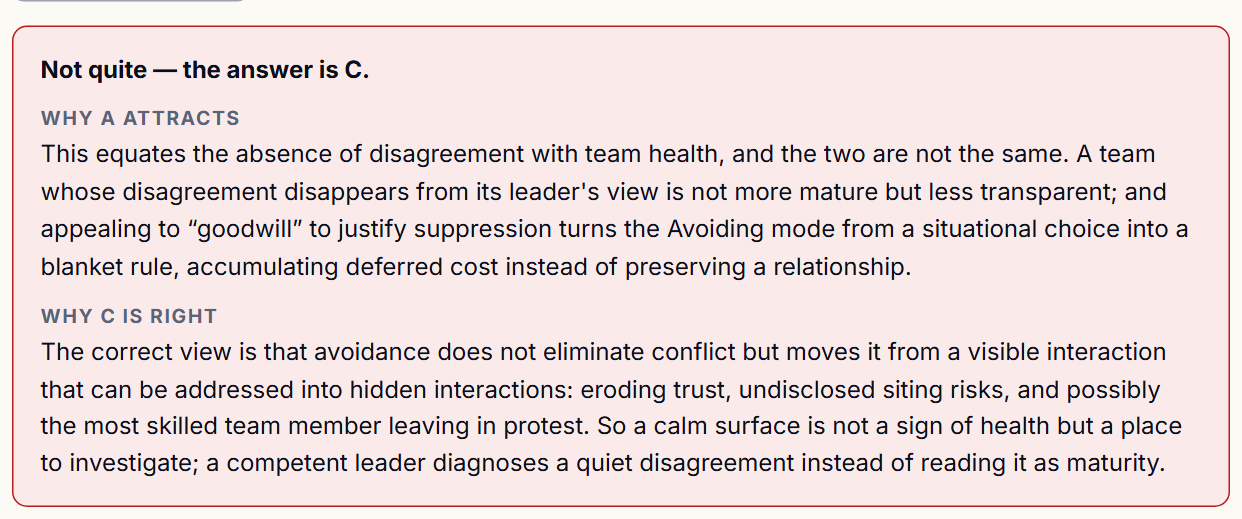
From the PMP® e-learning module. Try the module (20 min)
Interactive learning for your students.
- They practise the moment. Silence, the hard sentence, the pushback. They see what each choice does.
- You see more than a score. Every choice, how long they stayed silent, and the exact sentence they built.
- It’s built around your people. Your conflict, your cast, your brand. Every word sits in one file, ready to translate.
AI voices. Tested on a sample LMS.
How we work
With your team
You send the subject.
The goal, and whatever material you already have.
We build the whole course.
Every piece built to work with the others.
You mark the changes.
In one simple form. No long email threads.
We hand it over.
Polished, with every change carried through all five pieces.
We don’t just use AI. We direct it.
AI does the heavy lifting. Our checks catch what it misses. You get a finished course.
Three chapters, built end to end.
-
PMP®
Teams that avoid conflict until it costs.
-
CompTIA A+®
Technicians who replace parts on a hunch.
-
IC3 Digital Literacy
People who think security is a setting.
One belief, followed through five products
Try it
From our A+ trainer guide.
Two computers with black screens: one beeps, one is silent. Which is closer to being alive?
The beep means the motherboard is alive enough to complain. Total silence is the dangerous case: a missing CPU or a dead board.
Only something alive complains.
Answer to follow this belief through all five products.
-
Teaches the distinction inside the method.

…while a beep with a black screen means memory or a video card — the beep itself is evidence that the board is alive enough to complain.
-
Shows the symptom and the first thing to check.

POST beeps · The pattern points to the component: RAM, video or CPU
-
Names the belief, and the question that exposes it.

“A computer that beeps at boot is in worse shape than a silent one; beeps mean a damaged motherboard that needs replacing.” · Detection: Two computers with black screens: one beeps, one is silent. Which is closer to being alive? · Only something alive complains.
-
Sets the belief as a trap, and explains why it attracts.

Why this option attracts: A machine that beeps at boot is in worse shape than a silent one; the beeps mean the motherboard itself is faulty and needs replacement.
-
Tests it, with feedback in the bank’s exact words.

…total silence with a black screen is the more serious sign (a missing CPU or a dead board), not beeping.
About
- A global instructional design company.
- We build whole courses for trainers, institutes and organisations.
Let’s build your course.
Send us the subject. We’ll do the rest.